Cloud Data Backup and Its Impact on Business Continuity
Average reading time: 17 minute(s)
Business continuity is not a luxury. It is the difference between a company that weathers a crisis and one that never recovers. At the heart of every solid continuity plan sits one foundational element that too many businesses still underestimate: cloud data backup.
Whether you run a 10-person startup or a 5,000-employee enterprise, your data is your business. Lose it, and you lose everything connected to it. Customers, revenue, reputation, and legal standing all hang in the balance the moment your systems go dark.
This article walks through exactly how cloud data backup shapes business continuity, what you need to know before your next outage, and what steps you can take today to protect your organization.
Why Cloud Data Backup Is Not Optional Anymore
The numbers tell the story clearly. According to IBM’s Cost of a Data Breach Report 2023, the average cost of a data breach reached $4.45 million. That figure covers lost business, regulatory fines, incident response, and reputational damage.
Most small and mid-sized businesses never recover from a major data loss event. The Federal Emergency Management Agency (FEMA) has estimated that roughly 40% to 60% of small businesses never reopen after a disaster. Data loss is a leading driver of those closures.
Cloud data backup removes the single point of failure that on-premises storage creates. Your data lives offsite, encrypted, redundant, and accessible from anywhere. That changes the game entirely for business continuity planning.
The Role of Cloud Data Backup in Continuity Planning
Business continuity planning is a structured approach to keeping operations running through any kind of disruption. Think cyberattacks, natural disasters, hardware failures, or even a key employee making a critical mistake.
Cloud data backup fits into continuity planning at multiple levels.
The three core ways backup supports continuity
- Restoring data quickly after a failure event
- Maintaining access to files and systems during an outage
- Providing proof of data integrity for audits and legal compliance
A continuity plan without a solid cloud storage backup strategy is like a fire exit plan with locked doors. It exists on paper but fails when it matters most.
Recovery Time Objective (RTO) and Recovery Point Objective (RPO) are two terms every operations manager needs to know cold.
RTO vs RPO
| Term | What It Means | Example Target |
|---|---|---|
| RTO | How fast you recover after an outage | Under 4 hours |
| RPO | How far back in time you can recover data | Last 1 hour of data |
| Both together | Define your backup frequency and restore speed | Varies by business need |
The tighter your RTO and RPO targets, the more aggressive your backup strategy needs to be. Cloud data backup solutions like Veeam, Acronis, and Datto offer near-continuous backup options that can hit very tight RPO windows.
How Remote Data Protection Supports Remote Teams
The rise of remote and hybrid work has changed the threat landscape for businesses. Your employees are accessing company data from home networks, personal devices, and coffee shop WiFi. That data needs protection no matter where it lives or where it is accessed from.
Remote data protection is the practice of securing data that exists outside your traditional network perimeter. Cloud data backup is the backbone of this approach.
Here is why this matters for remote teams specifically.
Remote work risks that cloud backup directly addresses
- Employees storing files locally on personal laptops that never get backed up
- Data loss from device theft or damage
- Ransomware attacks on home networks spreading to company systems
- Accidental file deletion with no recovery path
- Shadow IT creating unmanaged data silos
A company I spoke with earlier this year ran a remote workforce of 80 people across three countries. One of their developers had two years of project files stored entirely on a personal MacBook. The laptop was stolen from a car. No backup. No recovery. The project had to be partially rebuilt from scratch. Three weeks of work gone, plus client trust severely damaged.
That same company adopted a cloud storage backup solution within 30 days. Every device now syncs critical folders automatically every 15 minutes.
Remote data protection best practices
- Mandate cloud backup agents on all company devices including personal ones used for work
- Use zero-trust architecture to limit data access by role
- Encrypt all backup transfers end-to-end
- Store backups in geographically separate data centers
- Audit remote access logs monthly
Meeting Compliance and Regulatory Requirements
Regulators do not care about your budget constraints or your technical challenges. They care about whether you protected the data you were trusted to handle.
Different industries carry different compliance obligations, and cloud data backup plays a direct role in satisfying many of them.
Compliance requirements and backup obligations
| Regulation | Who It Applies To | Backup Relevance |
|---|---|---|
| HIPAA | Healthcare organizations | Requires data protection, retention, and disaster recovery |
| GDPR | Companies handling EU resident data | Mandates data protection and breach notification |
| PCI DSS | Any business taking card payments | Requires secure storage and regular backup of cardholder data |
| SOC 2 | SaaS companies and tech providers | Availability and confidentiality controls including backups |
| FINRA | Financial services firms | Strict data retention and recovery requirements |
Failure to meet these requirements does not just result in fines. It can mean losing your license to operate, facing class action lawsuits, and permanent reputational damage.
Cloud data backup providers like Druva and Cohesity build compliance tooling directly into their platforms. Features like immutable backups, audit trails, and automated retention policies make regulatory compliance a byproduct of good backup hygiene rather than a separate project.
What to look for in a compliance-ready backup solution
- Immutable storage that prevents tampering with backup files
- Role-based access controls and full audit logs
- Automated retention schedules aligned to your specific regulations
- Data residency options for GDPR compliance
- Certified data centers with SOC 2 Type II or ISO 27001 status
Integrating SaaS Backup into Your Continuity Strategy
Here is a misconception that catches businesses off guard every single day. Your SaaS vendors do not fully back up your data on your behalf.
Microsoft, Google, Salesforce, and virtually every other major SaaS provider operate on a shared responsibility model. They are responsible for keeping their platform running. You are responsible for your data within that platform.
Microsoft’s own service agreement explicitly recommends that customers use third-party backup solutions. Salesforce’s data recovery service was actually retired in 2020, pushing full data recovery responsibility onto customers.
SaaS backup means using a dedicated third-party solution to back up the data sitting inside your SaaS applications. Think emails in Microsoft 365, records in Salesforce, files in Google Workspace, or projects in HubSpot.
Common SaaS data loss scenarios
- Accidental or malicious deletion by an employee
- Data corruption during a platform migration
- Ransomware encrypting data synced to cloud apps
- A departing employee deleting their files before offboarding
- Vendor-side outages that result in partial data loss
Top SaaS backup tools to evaluate
| Tool | Best For | Key Features |
|---|---|---|
| Backupify | Google Workspace and Microsoft 365 | Daily automated backups, fast restore |
| Spanning Backup | Salesforce, Google, Microsoft | Unlimited storage, compliance reporting |
| Veeam Backup for Microsoft 365 | Microsoft 365 heavy shops | Granular restore, local or cloud storage |
| Datto SaaS Protection | SMBs wanting managed backup | Simple setup, MSP-friendly |
| Avepoint | Large enterprises | Advanced compliance and governance tools |
Integrating SaaS backup into your continuity strategy means treating your SaaS data with the same seriousness as your on-premises server data. Set up automated backups. Test restores quarterly. Document your recovery procedures.
Minimizing Downtime Through Automated Backups
Every minute of downtime has a price tag. The Ponemon Institute has put the average cost of IT downtime at roughly $5,600 per minute for large enterprises. Even for smaller businesses, a few hours of downtime can mean thousands of dollars in lost productivity and revenue.
Automated backups are the answer to the human error problem. People forget to run manual backups. They skip backup tasks when they are busy. They assume someone else handled it.
Automation removes that risk entirely.
How automated cloud data backup reduces downtime
- Continuous or scheduled backups run without any human intervention
- Instant failover options let systems switch to backup environments in minutes
- Automated alerts notify your team of any failed backup jobs before an outage happens
- Restore processes can be scripted and triggered quickly without specialized knowledge
- Version history lets you roll back to a known good state if ransomware or corruption hits
A logistics company in the midwest ran a manual backup process for years. One week, their IT admin was out sick. Nobody ran the Friday backup. The following Monday, a ransomware attack hit. The most recent clean backup was six days old. They lost a week of order data covering hundreds of shipments. The manual recovery process took four days.
That same company switched to automated cloud data backup shortly after. Their RPO is now 30 minutes. Their RTO is under two hours.
Automation features to prioritize
- Incremental backups that capture only changed data to reduce bandwidth and cost
- Snapshot-based backup for virtual machines and databases
- Automated restore testing on a set schedule
- Alert integrations with Slack, PagerDuty, or email
- Policy-based retention so old backups expire automatically
Risk Assessment for Cloud-Dependent Companies
If your business runs mostly or entirely in the cloud, your risk profile looks different from a traditional on-premises operation. That is not necessarily bad. But you need to understand your exposure clearly.
A cloud risk assessment for backup purposes covers the following areas.
Cloud dependency risk factors to evaluate
- Single cloud provider dependency with no multi-cloud or hybrid strategy
- Lack of backup for cloud-native data like SaaS apps and cloud databases
- No tested disaster recovery plan for cloud environment failures
- Inadequate access controls on backup storage buckets or repositories
- Backup data stored in the same cloud region as production data
That last point trips up a lot of companies. Storing your backups in the same AWS region as your production workloads means a regional outage takes both down simultaneously. Geographic redundancy is non-negotiable.
Risk assessment scorecard for cloud backup readiness
| Risk Area | Low Risk | Medium Risk | High Risk |
|---|---|---|---|
| Backup frequency | Every hour or less | Every 4 to 8 hours | Daily or less |
| Geographic redundancy | Multiple regions | Two regions | Single region |
| Backup testing | Monthly | Quarterly | Never |
| SaaS data backup | Fully covered | Partially covered | Not covered |
| Access controls | MFA and RBAC in place | Partial controls | Open access |
| Encryption | End-to-end | At rest only | None |
Score your organization honestly across each row. Any high-risk rating is a gap that needs a remediation plan this quarter.
Aligning Backup Strategy With Business Goals
Your backup strategy should not exist in isolation inside the IT department. It needs to connect directly to what your business is trying to achieve.
A few examples of how that alignment looks in practice.
Scenario 1 – E-commerce company The business goal is 99.99% uptime during peak shopping seasons. The backup strategy needs near-zero RTO, automated failover, and pre-tested disaster recovery runbooks. Quarterly testing is not enough here. Monthly or more.
Scenario 2 – Healthcare provider The business goal is HIPAA compliance and patient trust. The backup strategy needs immutable storage, strict access logging, and long-term retention policies aligned to state and federal law. A SaaS backup solution covering their EHR system is non-negotiable.
Scenario 3 – SaaS startup The business goal is rapid growth without technical debt slowing them down. The backup strategy needs automation, minimal management overhead, and cloud-native tooling that scales with the product. Managed backup services let the engineering team stay focused on product.
Questions every operations manager should ask
- What is the true cost of one hour of downtime for this business?
- Which systems are genuinely mission-critical versus nice to have running?
- What compliance obligations does our data carry?
- How often does our business data actually change?
- What is our current recovery process and has anyone actually tested it end-to-end?
The answers to those questions shape every backup decision that follows.
A Real Company That Survived a Major Outage
In 2021, a major hosting provider called Fastly suffered a global outage that took down thousands of websites simultaneously for nearly an hour. Companies like the New York Times, Reddit, Twitch, and Amazon were affected. You can read the full incident breakdown on Fastly’s blog.
What separated businesses that recovered quickly from those that scrambled was preparation. Companies with secondary CDN configurations and independent cloud storage backup for their content and data were back online within minutes. Companies that relied entirely on Fastly without a fallback plan were dark for the full duration.
A mid-sized media company I know well runs a hybrid backup strategy. Their primary content delivery runs through Fastly. Their backup runs through AWS CloudFront. Their data sits in backups across two AWS regions with daily automated snapshots and a tested failover procedure. When Fastly went down that day, they switched to CloudFront in under 8 minutes. Readers noticed nothing.
That resilience came from deliberate planning, regular testing, and a willingness to pay for redundancy before they needed it.
Budget Planning for Long-Term Cloud Resilience
Budget is where good intentions often die. Cloud backup is not free, but the cost of not having it is almost always higher.
Here is how to frame the budget conversation with leadership.
Total cost of ownership factors for cloud data backup
- Storage costs per terabyte per month
- Egress fees for restoring large volumes of data
- Licensing fees for backup software or managed service
- Staff time for monitoring, testing, and policy management
- Compliance and audit support costs
Approximate monthly costs for common backup scales
| Business Size | Data Volume | Estimated Monthly Cost |
|---|---|---|
| Small (under 50 staff) | 1 to 5 TB | $50 to $300 |
| Mid-size (50 to 500 staff) | 10 to 50 TB | $500 to $3,000 |
| Enterprise (500+ staff) | 100+ TB | $5,000 to $50,000+ |
These are rough ranges. Your actual costs depend heavily on backup frequency, retention duration, and which tools you choose. Providers like Backblaze B2 offer very competitive storage rates compared to AWS S3 or Azure Blob.
Ways to optimize backup costs without sacrificing protection
- Use tiered storage so older backups move to cheaper cold storage automatically
- Compress and deduplicate data before backup to reduce storage volume
- Match retention periods to actual business and compliance needs rather than keeping everything forever
- Use incremental backups instead of full backups to cut bandwidth and storage costs
- Consolidate backup tools to reduce overlapping licensing fees
Frame the budget ask in terms of risk dollars. If a single outage costs your business $50,000 in lost revenue and productivity, spending $2,000 per month on a solid backup strategy is not an expense. It is insurance with a predictable premium.
Ongoing Monitoring and Policy Updates
Buying a backup solution and setting it up is just the starting point. The real work is keeping it current, tested, and aligned to how your business actually operates.
Businesses change constantly. New SaaS tools get adopted. Data volumes grow. Employees join and leave. Regulations change. Your backup policy needs to keep pace with all of that.
Monthly backup monitoring checklist
- Confirm all backup jobs completed successfully with no failures
- Review storage consumption and project growth trends
- Check encryption certificates and access credentials for upcoming expiration
- Verify that new data sources added in the past month are covered by backup policies
- Review access logs for any unusual restore activity
Quarterly backup review tasks
- Run a full disaster recovery test on at least one critical system
- Review and update RTOs and RPOs based on any business changes
- Audit user access to backup systems and remove departed employees
- Check for software updates or patches on your backup tools
- Review compliance requirements for any regulatory changes
Annual backup strategy review
- Full cost and vendor analysis to ensure you are getting value
- Re-evaluate backup scope as the business grows or changes
- Update your disaster recovery plan documentation
- Brief leadership on backup posture and any identified gaps
- Re-test your full recovery process end to end
One often-overlooked policy element is backup ownership. Someone needs to own this function clearly. Not just IT. A named individual with accountability for backup health, testing schedules, and incident response. Without clear ownership, monitoring tasks slip and gaps accumulate silently until there is a crisis.
Building a Backup-First Culture
Technology alone does not protect your business. Culture does. When employees understand why cloud data backup matters and what role they play in keeping data safe, your overall risk profile drops significantly.
Ways to build backup awareness into your organization
- Include data handling and backup responsibilities in employee onboarding
- Run annual tabletop disaster recovery exercises with cross-functional teams
- Share the real cost of data loss incidents in company all-hands meetings
- Reward employees who flag backup gaps or potential data risks
- Make backup status visible in IT dashboards and operations reviews
A backup-first culture means no one assumes someone else is handling it. Every team lead knows their department’s critical data is covered. Every new tool that gets adopted goes through a quick data classification and backup review before widespread use.
Choosing the Right Cloud Data Backup Partner
Not all backup vendors are built the same. The wrong choice can leave you with slow restores, hidden costs, or compliance gaps that surface at the worst possible time.
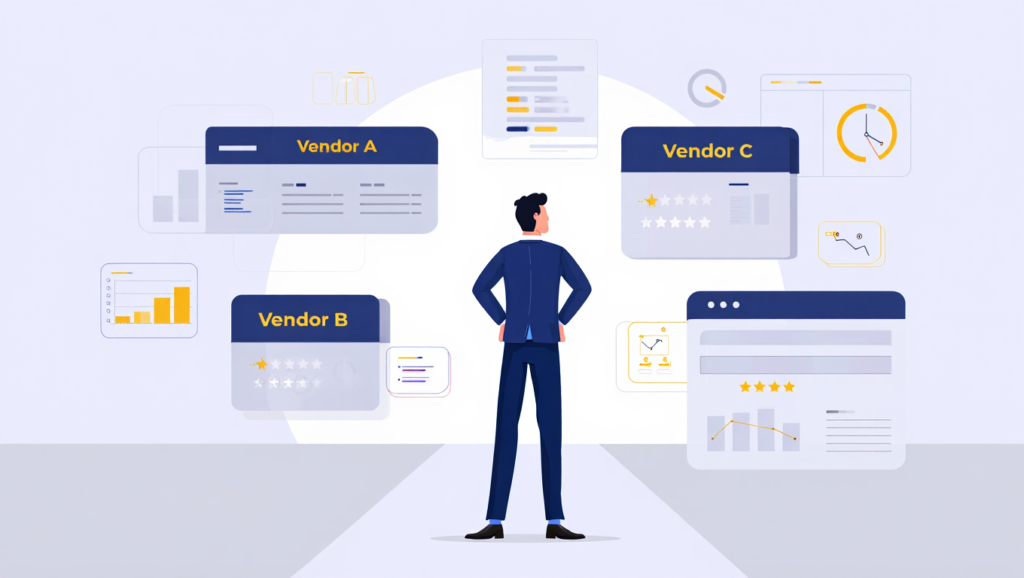
Vendor evaluation criteria
| Criteria | Why It Matters |
|---|---|
| Recovery speed | Slow restores defeat the purpose of having backups |
| Geographic data center options | Redundancy and data residency compliance |
| Encryption standards | AES-256 at minimum, end-to-end preferred |
| SLA guarantees | Vendor accountability if their service fails |
| Support quality | 24/7 access to real humans during a crisis |
| Scalability | Can it grow with your data volumes without pain? |
| Compliance certifications | SOC 2 Type II, ISO 27001, HIPAA BAA availability |
| Pricing transparency | No surprise egress fees or hidden overage charges |
Always run a proof of concept before signing a long-term contract. Set up a test environment, run some backup jobs, and then actually attempt a restore. If the vendor cannot support you through a test restore before the sale, they will not support you through a real crisis either.
Questions to ask every backup vendor
- What is your uptime SLA for the backup service itself?
- Where exactly is my data stored geographically?
- How do you handle a large-scale restore request during a widespread outage?
- What encryption do you use in transit and at rest?
- Can I bring my own encryption key (BYOK)?
- How do you handle data if I cancel my subscription?
The Connection Between Cloud Data Backup and Cyber Insurance
Cyber insurance has become a standard line item for businesses of all sizes. What many business leaders do not realize is that your backup posture directly affects your insurability and your premium.
Insurers now ask detailed questions about backup practices during the underwriting process. Weak backup policies can result in higher premiums, lower coverage limits, or outright denial of coverage.
What insurers want to see
- Documented backup policy with defined RPO and RTO targets
- Evidence of regular backup testing and successful restores
- Offsite or cloud-based backup separate from primary systems
- Immutable backup storage that protects against ransomware
- Incident response plan that includes backup recovery procedures
Strong cloud data backup practices do not just protect your data. They protect your insurance position and your ability to make a successful claim if a major incident occurs.
Take Action Today
The gap between businesses that survive a major outage and those that do not almost always comes down to preparation. Cloud data backup is the single most impactful step you can take right now to strengthen your business continuity position.
Your action for today is this: Run a backup audit. List every critical data source in your business, check whether it is actively backed up, verify when the last backup ran, and attempt a test restore on at least one system. What you find will tell you exactly what you need to fix.
If you do not have a cloud data backup solution in place yet, start a free trial with a reputable vendor this week. Veeam, Acronis, Druva, and Datto all offer trials. Get eyes on your real data risk before an incident forces your hand.